A Christian Mantra
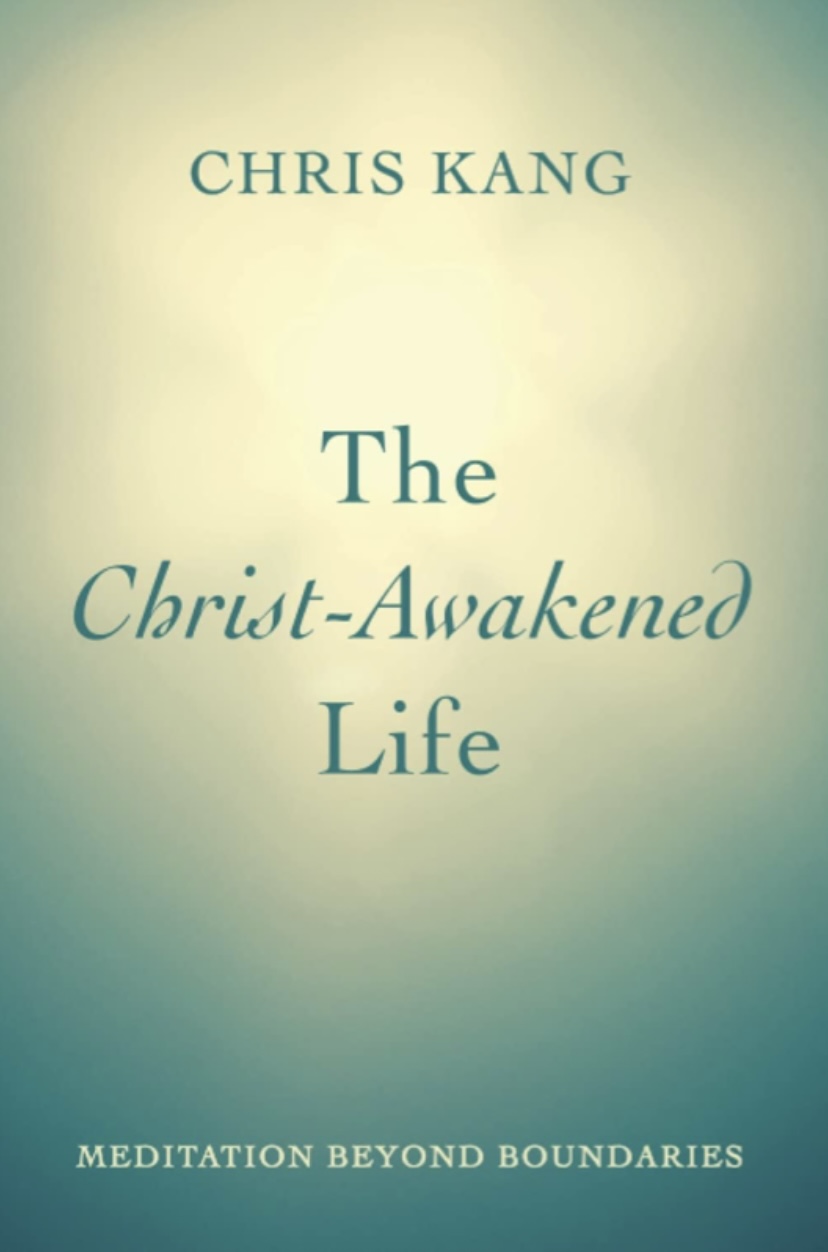

Christian meditation is a contemplative practice that seeks to deepen the relationship between the meditator and God. It involves a rich and immersive engagement with scripture, prayer, and the inner life, often emphasizing silence and stillness. Christian meditation traces its roots to Jesus of Nazareth himself, whose frequent sojourns in quiet places for deep prayerful communion with his heavenly Father serve as clear indicators of a deep contemplative life. After Jesus, we see Christian meditation taught and transmitted through the desert fathers and mothers from the 3rd century onwards and later in the writings of John Cassian, a 4th century Christian mystic and theologian.
In our time, Benedictine monk and Roman Catholic priest Fr. John Main, OSB has revitalized and transmitted Christian meditation using the ancient Christian prayer word or mantra "Maranatha." This mantra is perhaps the earliest Christian prayer word used, which is found in the final and apocalyptic book of the Bible, the Book of Revelation (see Revelation 22:20). The mantra "Maranatha," which translates to "Come, Lord Jesus," serves as a powerful focal point in this practice, inviting the presence of Christ into the meditator's heart and mind in the here and now. This simple yet profound phrase encapsulates the longing for divine presence and the anticipation of Christ's return. At Awarezen, we regard this Christian mantra as the fourth and ultimate mantra for contemplative practice and growth.
The Meaning of "Maranatha"
The term "Maranatha" is rooted in the Aramaic language and appears in the New Testament, symbolizing both a plea for Christ's immediate presence and a proclamation of faith in His eventual return. In the context of meditation, "Maranatha" becomes more than just a phrase; it transforms into a spiritual heartbeat that aligns the meditator's thoughts and desires with the essence of Christian hope. It serves as a reminder of God's imminent presence and encourages a state of readiness and openness to divine guidance. The mantra serves as a prayer word which resonates the very being of the contemplative in a way that opens the heart to the Christ presence timelessly available in every dimension, time, place, event, person, and matrix of reality.
Christ as Jesus is luminously present in the depth dimension of the faithful contemplative, even as Christ the Son is eternally unified with the Father in the singular stream of self-emptying love between them, who is the Holy Spirit. When we resound the mantra, we join mysteriously with and into that unified stream of Father-Son-Spirit love most definitively exemplified in Jesus the Man, through whom we enter into the timeless prayer of Jesus to his Abba, God the Father, in the Spirit.
Pragmatics of Mantra Practice
In terms of actual practice, we resound the mantra "Maranatha" with equal emphasis on the intonation of each of the four syllables "Ma-", "ra-", "na-", "tha-". Take care that this mantra is resounded silently within the heart, not recited out loud. We allow the mind to descend and settle into the heart, the centre of our being where we unhurriedly resound the mantra in our own time, at our own pace. Each syllable is resounded with equal emphasis and duration, clearly and precisely. The resonant sound of "a-" of each syllable is mindfully noted as is the distinctive quality of open clarity and bright stillness in an expanse of naked aware emptiness. Recognizing this clean-clear nature of the mind in terms of its empty luminosity and awareness may take some time; and precise pointing-out instructions from an experienced mentor can be very supportive.
Here are some pointers for beginning mantra practice:
Sit quietly and settle into a contemplative posture of relaxation, stability, and uprightness that can be comfortably sustained for a length of time.
Begin with an opening prayer, such as the one composed by Fr. John Main, OSB.
Descend the mind into the heart and rest there in a spacious and relaxed manner.
Resound the mantra silently in one's heart, placing equal emphasis on each syllable.
Avoid thinking about or interpreting the mantra in any way.
Naturally allow the mantra to resound without self-effortful striving.
No necessity for linking the resounding of the mantra with the rhythm of the breath.
Release any compulsion to control the speed or rhythm of the mantra or breath.
Resound the mantra from start to finish of every session.
Duration of each session ideally should be 2o minutes, at least.
Remain alert, awake, and fresh throughout the session even as you relax as fully as possible.
End with a closing prayer, such as the one composed by Fr. Lawrence Freeman, OSB.
The Purpose of Christian Meditation
The primary purpose of Christian meditation is to foster a deeper communion with God. At the further reaches of this practice, Christian meditation supernaturally invites one into unitive realization of God in his triune holy emptiness and radically ineffable presence. Though "supernatural," the deepening process is actually quite organic - it is supernaturally natural! Through a practice like resounding the mantra "Maranatha," mediators can cultivate a sense of peace, clarity, and spiritual insight. This meditation aims, at least at the outset, to:
Enhance awareness of God's presence in daily life.
Facilitate spiritual growth and transformation.
Encourage a contemplative mindset that values silence and listening.
Prepare the heart for prayer and worship.
Practicing Christian Meditation
The practice of Christian meditation takes a lifetime, perhaps even more than a lifetime. The wisdom of Chan can provide some useful pointers for such practice, in a spirit of interfaith dialogue and mutual learning. Jesuit priests have been known to train in Zen (the Japanese transmission of Chan which originated in China) and some of them have even become Zen masters themselves, whose awakening experiences have been authenticated by their own renowned Japanese Zen masters. For example, Fr. Hugo M. Enomiya-Lassalle, SJ and Fr. Robert E. Kennedy, SJ were two Jesuits who became Zen masters in their own right. Fr. William Johnston authored a well-known book on Christian Zen while Ruben L. F. Habito, a former Jesuit priest, teaches Zen in his own Zen community. One of my spiritual heroes, the late Trappist monk Fr. Thomas Merton OCSO, was about to learn Dzogchen, an advanced meditative system in Tibetan Buddhism, from the late Chatral Rinpoche before his tragic death in a retreat centre in Thailand. It is in this same spirit of mutual learning and respect that we embark upon this journey of Chan-informed Christian mantra contemplation.
Mantra as Nondual Serenity-Insight
This method emphasizes the interconnectedness of all things and encourages practitioners to experience a state of serene awareness. By centering on "Maranatha," meditators can cultivate an understanding of their unity with God and creation, fostering a sense of peace and acceptance. In the atmosphere of nondual serenity-insight, the contemplative resounds the mantra "Maranatha" without contrivance or agendas. There is no expectation of getting anything or becoming anyone special. We do not deliberately seek to connect our breathing with the non-vocalized resounding of the mantra in our heart. But if it so happens that the mantra resounds in tandem with the breath's natural rhythm of inhalation and exhalation, just let it be. There is no need to consciously rectify it or to delink the breathing from the mantra. Simply allow the mantra and breathing rhythms to synchronize on their own if they need to. Allow them to decouple if they need to. Naturally. Organically. You, the ego-self, are out of the way. No fuss. No force. Simply letting them through, letting them be, and letting them go - in their own time and at their own pace. This is the pace of grace, the unforced rhythm of grace where the rigmarole of self-contriving and self-performing are absent. All events organically unfold in the currents of the Dao, so to speak. All action is non-action, by which everything can be done.
A word about letting through, letting be, and letting go. I learnt these phrases first from my heart teacher Acharya Godwin Samararatne and later from teachers of the Dharma Drum Mountain Chan tradition, particularly Master Shengyen's Dharma heirs John Crook, Simon Child, and Rebecca Li. I myself have received the threefold refuge and precepts from as well as trained in Chan meditation with senior Dharma heirs of Master Shengyen, for which I am immensely thankful. What I mean by letting through is an attitude of allowing and opening to experience, even unpleasant and difficult ones. As a contemplative, we desist from reacting to pain and discomfort whether somatic or psychological with instinctive repression or suppression. Why? Because repression or suppression only makes things worse! By repressing or suppressing, we are intensifying the energy of suffering by compressing it into a dense subconscious experiential time-bomb that would eventually explode. We do not want that. Thus, we let through all kinds of experience without experiential avoidance.
We also let be whatever experience has come through to our field of knowing, allowing them to be present and to stay for as long as they like. Godwin coined an interesting term for such allowance of unpleasant and difficult emotions - he calls this practice "having a monster party." What he means is that we play mindful host to the "monsters" of our hearts and minds, the difficult and unpleasant emotions that we normally push away from view. In so doing, we come to see them for what they really: empty. nebulous, contingent states of mind that are transient by nature and pliable, if we are skilled enough. Finally, to let go means to allow these difficult states of mind to dissolve as they should, in their own time. We allow them to naturally self-liberate in their own place, as they run of steam in the face of our non-reactivity and non-resistance. We see how the energy of toxic experience dissipates and disappears into the clear space of the mind, if we do not add our ego and reactivity to them.
Now, in this nondual approach of serenity conjoined with insight, we do not fixate on developing "concentration." The word "concentration" sounds rather tensed and tight. For does it not share a syllable with the word "constipation?" You get my drift. Nondual serenity and insight means that as we resound the mantra in our heart-space, we release any agenda for control and acquisition. We simply let the mantra vibrate to its own innate frequency even as the mind entrains itself to that frequency. There is a natural deepening and resonating, a process beyond ego-additives. An egoless and effortless stilling and silencing of the mind follows, devoid of self-induced command and control. Attention is naturally and un-self-consciously drawn into its own source, the silent space before any ideation and vocalization occur and out of which such mental activities emerge. As attention then melts into its source which is pure awareness without boundary and duality, it is heightened in its luminosity and knowing. This is because the nature of mind is thus: luminous and knowing. It is like this.
And this luminous knowing is devoid of any inherent self-identity. This luminous knowing that is the mind's nature is empty of inherency, empty of of existing by the power of its own identity or essence. Mind is ultimately empty of existing independently from its own side and is in fact a contingent phenomenon through and through. Initially, when we arrive at mind's natural luminosity and knowing, there are still degrees of reification of self in that experience. We do not cut straight through to the pristine ocean of luminous awareness (or knowing) that is free-flowing and free of any trace of self-reification whatsoever. At this point, it is very tempting to proclaim that we are abiding as our aware beings, free of all subject-object duality. We think this because awareness is not an object of mind that can be observed from a distance. Hence, we mistake this preliminary realization for the more profound realization of pristine awareness devoid of all traces of reification. Lets use a simple analogy: the ice block of deluded mind first melts into the slush of semi-liquidated water (which is substrate consciousness) that has some degree of reification before dissolving fully into the fresh sparkling stream of pure mountain water (which is pristine awareness) free of all degrees self-reification. We tend to conflate our experience of substrate consciousness with the breakthrough realization of pristine awareness, knowingly or unknowingly but more likely the latter. What enables this cutting through to the pristine waters of naked awareness is the presence of insight conjoined with serenity. Deep insight breaks the dam of self-reification and unleashes awareness in all its boundlessness and degrees of freedom. Such awareness is said to pervade, and be able to know and see the minds of all sentient beings. This is buddha-consciousness as it were. Such deep insight can, but need not be, "cultivated" following the structured "mastery" of serenity. The trajectory of "mastering" serenity first followed by insight is not a strict dogmatic requirement.
In this nondual approach, insight spontaneously emerges out of the absolute space of pristine awareness itself. For pristine awareness does not function according to the linear logic of self-effortful striving. Pristine awareness operates by and through grace. What or whose grace? In our Christian tradition, we say that grace ultimately is located in Jesus Christ in whom the fullness of triune divinity dwells bodily and whose humanity is full and real, inseparable from his divinity. Hence, in the timing and dance of grace, pristine awareness is activated into emergent insight by Christ who stands outside awareness in reality but is nevertheless pervasive with awareness by way of his infinite being. It is Christ who first makes pristine awareness present and possible within us and eventually made active in us. Christ is the reason why pristine awareness lies hidden within us as our innate potential for enlightenment, our buddha-nature. Without Christ, without his grace, we do not stand a chance!
Mantra as Silent Illumination
Silent illumination involves resting in the present moment without striving for specific thoughts or experiences. In this practice, the mantra "Maranatha" can be repeated silently, allowing it to illuminate the mind and heart, creating a space for divine insight and understanding. Silent illumination by its very nature is not a method per se. It has no specific technique and no fixed routine. Silent illumination pervades the entirety of one's moment-by-moment experience, piercing each moment with utter clarity and sheer silence of non-reactivity. In some ways, it is akin to what Jiddu Krishnamurti calls "choiceless awareness" though we need not stretch that comparison too far. For silent illumination goes deeper than bare non-selective attention to the contents of experience from moment to moment, as is the case with choiceless awareness. Silent illumination probes deep into the very heart of experience to reveal its empty essence and luminous expressivity. In this sense, silent illumination is best compared with the profound instructions of Mahamudra and Dzogchen in Tibetan Buddhism.
That said, what does the practice of mantra as silent illumination look like? First, the contemplative does not focus and fixate on the mantra as an object of concentration. It is not about shutting out all thoughts and focusing on a single point. Secondly, one opens up one's awareness to receive all that is happening in every emerging present moment. Nothing is left out. Nothing is pushed aside. Nothing is pressed down. Everything is included and welcomed with unobstructed awareness of the now. Thirdly, the contemplative rests in equanimity throughout all experience, being non-reactive in the space of bright clear awareness with respect to every experiential event - somatic, psychological, or environmental. In fact, silent illumination makes no hard and fast separation of somatic, psychological, and environmental for what we call "body," "mind," and "world" are labels imbued with conceptual meaning superimposed on the fluid stream of experience from moment to moment. If we look carefully, we can come to realize that even this "moment" is a conceptual label superimposed on what simply is. Buddhists calls this "suchness" or thusness": the sheer facticity of that which timelessly and placelessly happens. For what indeed is "time" and "place" in the naked and wordless facticity of what is?
To begin with, mantra as silent illumination allows for the contemplative to simply settle into the naturalness of each moment, sustaining a bright and restful knowing of what is. Breathing might come into the foreground, which is seen and known with bright non-reactivity. Bodily sensations might arise, again seen and known with bright non-reactivity. Thoughts and feelings might emerge out of nowhere, quietly and restfully noticed with mirror-like equanimity. Sounds and colours in our habitat might impinge on our sense consciousness, which are cognized without reactivity in spacious awareness. With every emerging present moment, all that is experienced is allowed to be experienced fully without censorship or resistance even as one remains uncaptured by the varied content of the moment. Such a mind that is silent and illuminating can be deemed a non-colonized mind.
As the practice proceeds, the contemplative resounds the mantra within that vast expanse of silent illuminating awareness. In a profound way, this mantra resounding itself is an emergence out of the silent space of awareness that is its source, ground, and destination. Resounding the syllables of "Maranatha" with equal intonation and duration as mentioned, one comes to the realization that each syllable and each mantra for that matter is a spontaneous display of silent awareness itself. They are the creative expressivity of the silence and luminosity of consciousness, serving as portals that draw attention back to its very source and ground. In so doing, attention unwraps itself from its content and releases and returns back home: naked awareness itself. Just sitting with this penetrating process makes possible a gradual deepening, a gradual unfolding, and a gradual piercing into the heart of reality. All of this happens without force or control. Nature takes it own course. The mountain stream makes it own way. The crystal clear waters of consciousness find their own level and settle in their own place.
Without expectation or desire for results, it might so happen that silent illumination enters a new dimension. This goes beyond the penetrative wisdom of seeing emptiness and luminosity of awareness that confers a sheer freedom of mind. This is the reception of pure grace from above, from beyond the chasm that separates creation and Creator, humanity and God, cosmos and Consciousness. The inbreaking of such grace destroys all preconceived notions of the practice and disintegrates any sense of self-driven spiritual realization. The duality of self and other dissolves as we begin seeing and feeling reality with and through the eyes of God. The wisdom of seeing deep interbeing of all creation - which is the emptiness of creation - is one aspect of seeing knowing reality through God's eyes. Such vision enables us to see and know the vast interconnections of causes and conditions working together with composite parts and mental designation to make up each moment of experience. The nascent present moment is not an isolated static thing full of its own reality but an emergence dependent on a myriad of contributing factors. Isolated independent selves and objects start to unravel. We start to feel and sense more freedom in the midst of life.
One might ask: how can mirror-like pure awareness be aware of itself, since all knowing is by nature dualistic and requires a subject and an object? By this logic, if awareness is aware of itself, how can awareness remain nondual given that it necessarily would bifurcate into a knowing subject versus an object of knowledge. Actually, this does not happen. Awareness is self-luminously aware in an auto-reflexive way that resists dualistic bifurcation. Let's use an analogy. Awareness is like the sun. Just as the sun illuminates the earth and its creatures while being itself self-illuminating, awareness illuminates objects of experience while being self-illuminating in its own ground. The light of awareness shines within its own interiority even as it shine onto all objects being experienced. And just as the sun warms up the earth and its creatures, awareness is self-warming in its own responsiveness that requires no external target. Out of the fullness of its own loveliness, awareness responds in love to others perceived in a nondual manner without seeking to control or manipulate out of ego-grasping.
Mantra as Huatou
Huatou translates to "word head" and involves focusing on a key phrase or question to penetrate the depths of one's consciousness. It is a critical phrase that invites deep investigation in a spirit of curiosity and wonderment. Literally speaking, huatou points to the source of the word, the placeless place where words and ideas sprout. In Christian meditation, "Maranatha" can serve as a huatou, drawing the practitioner into a deeper exploration of their faith and relationship with Christ.
In the huatou approach to Christian mantra practice, we do not employ the mantra as a mere device for focusing or stilling the mind. Nor do we see it as dogged repetition in the face of mounting inner distraction. Rather we evoke a sense of wonderment and curiosity in relation to the mantra "Maranatha." Truth be told while we may "know" this Aramaic word to mean something like "Come, Lord Jesus," we may not actually know what its meaning really means! That is to say, if we are humble enough to be an innocent beginner who is fresh of heart, we can come to acknowledge our own lack of true and full understanding of the mantra's import and meaning. What do we mean by "come?" And who do we say Jesus is? What does "Lord" mean?
We realize that we do not truly and fully know! Such honest self-diffidence and self-discovery will naturally lead us into a "condition of complete simplicity costing not less than everything" (T. S, Eliot). We empty ourselves of our own ideas and opinions, of our own clinging to who we think we are and who we think Jesus is. There is a sense of curious wonderment in the midst of all that not-knowing. And that is strangely comforting, for it frees us from the position of being on top of things and standing on a pedestal of professed knowledge. We come down from our high horses, so to speak. We start to taste the flavour of humility and simplicity.
There may even be a degree of perplexity in the face of the sheer mystery of it all - the all that is the presencing present and the present that is presenced. Each emerging moment of experiencing is what we might call the "present." Look for it as a concrete thing and you will never find it. Nebulous yet presently appearing, the present simply is. For now, the present might be the sound of a bird. For the next now, it might be the voice of your loved one calling you. And in the following now, the present might be the aroma of freshly brewed coffee. Then, the present opens up as the restive awareness that is the luminous space within which all present appearances abide, by which all present appearances are known, and out of which all present appearances are made. In any case, the present is the present no matter what the manifestation is. Presencing the present means that we are fully there for each present moment: in open contact with the present without avoidance and without being sucked in.
Hence, in light of such presencing of the present, we can conclude: we really do not know the present even though we assume that we do. At the moment of mantra practice, the most salient present is the mantra itself resounding in one's heart-space. This mantra comes with wonderment and even perplexity, if only we can allow the discomfort of perplexity to be there without censorship. Assuming we can, this perplexity that is the correlate of the sheer mystery of Jesus whom we are coming to know can be given space to grow and expand. If so, it can grow and expand into a great ball of doubt that completely covers the field of experience in every present. This doubt is not vacillation or skepticism but a vibrant alive mode of fearless faith. Is the faith to doubt. It is the faith that speaks to the solid rock foundation of our being, unshakeable and free. In this great ball of perplexed wonderment, both doubt and faith melt into an absolute space of unknowing that truly knows.
We step out of ourselves into a greater knowing beyond the confines of the ego in all its degrees of subtlety. The great ball can implode into sheer emptiness and emptiness shatters into indescribable freedom and bliss. We are pulled into the orbit of the triune Mystery fully shining through and as Jesus Christ. We dissolve into the embrace of Jesus as he magnetizes us into the dance of love amongst the three Persons of the Godhead. We realize by the grace of divine revelation the absolute meaning of "Maranatha" and all doubt ceases and all faith shines in the freedom of Christ that is primordial and uncreated. We begin to savour the triune dance of love in absolute wonder and joy beyond anything we can ask or imagine. This is not the end. For infinitude has no end. We will continue to be drawn into the triune Life over and over again ad infinitum even as we let Jesus shape and transform us from glory to glory into his likeness and image. This is grace supreme.
Identifying Pitfalls
While engaging in Christian meditation, practitioners may encounter several pitfalls. These pitfalls listed here are common but by no means exhaustive. Observe and notice if you succumb to any of these pitfalls. If you do, congratulations. You are only human. Like the rest of us. The wisdom of pitfalls is not that we should never ever have them but that we learn whatever we can from them. We adopt a spirit of unlearning habits that do not work for us and relearning new patterns that are skillful, wise, and compassionate to ourselves and others. With the right attitude, we do not need to fear these pitfalls but simply watch out for them with mindful care and playful wisdom. We know that we can counteract these pitfalls skillfully with the right antidotes that work for us. Whatever we do and whichever method we practice, we do so in an ambience of love and awareness free of unhelpful and unnecessary self-condemnation. Be gentle with yourself. Be firm but in a caring way.
Distraction: The mind may wander, leading to frustration.
Expectations: Holding onto specific outcomes can hinder the experience.
Superficiality: Focusing solely on the mantra as an object of mind without deeper contemplation can limit growth.
Cogitation: Thinking about the mantra and filling your head with doctrinal ideas can stifle natural deepening of the practice.
Rigidity: Over-tightening your attention by excessive focus can cause tension, even headaches.
Laxity: Over-loosening your attention by lack of energy can cause dullness and sleepiness.
Desirous attachment: Habit patterns of lust for sensual and mental stimulation can pollute the lucidity and placidity of mind preventing stillness and centredness.
Aversion: Habit patterns of annoyance, anger, resistance, dislike, hostility, and hatred can cause turbulence that churns up the mind.
Restlessness and worry: Mental imaginations, memories, anxieties, and fears can obstruct the flow of attention leading to choppy waters and inability to settle down.
Dullness and drowsiness: A lack of vividness and energy of attention can gradually slide into dullness which intensifies into drowsiness. This is different from physical tiredness necessitating good restful sleep.
Skeptical doubt: A paralyzing sense of doubt and skepticism that wavers and vacillates, questions without a real desire for clarity but out of a sense of dissatisfaction or unworthiness.
Tips for Avoiding Pitfalls
To cultivate a fruitful practice of Christian meditation, consider the following tips which are not meant to be exhaustive but that seek to address common issues arising out of contemplative practice:
Regularity: Set a regular time and space for meditation to establish a routine.
Quiet: Find the quietest place possible for your practice. Set it up as a beautiful contemplative space where you can be yourself in a most natural way.
Temporality: Begin with short sessions, gradually increasing the duration as comfort grows.
Duration: Start with 20 minutes per session, If you not able to do so, just start with whatever duration you can handle.
No expectations: Approach meditation with an open heart, free from expectations.
Guided practice: Use guided meditations or resources to deepen understanding and practice.
Inspiration and Wisdom for Lifelong Practice
Meditate formally at least twice daily, without interruption for one's whole life.
Retreat into silence and solitude for intensive contemplative practice at least once a year.
Reflect on scripture passages that resonate with the theme of waiting and longing for God.
Engage with writings from Christian mystics and contemplatives who emphasize contemplation
Participate in community meditation groups for shared experiences and encouragement.
Serve your community and society out of an overflow of love, awareness, joy, peace,and wisdom born of contemplative practice and interior depth.
Be on mission for the highest Good who is God in Christ, to embody and witness the gospel of grace and truth to all corners of the world in hope of the new creation to come.
In conclusion, the practice of Christian meditation, particularly through the mantra "Maranatha," offers a profound way to connect with God. By incorporating methods from Chan Buddhism, practitioners can enhance their experience while remaining mindful of potential pitfalls. With dedication and openness, Christian meditation can lead to a deeper understanding of faith and a more intimate relationship with the divine. Such intimacy can deepen into a love relationship with God beyond mere superficial belief or received ideas that make little sense to you.
This deepening love relationship with God may begin with duality at first but move beyond it into nonduality. Nonduality though is not the last word. Nonduality can deepen further into a pristine devotionality free of duality and nonduality, veering away from the "many" and the "one", beyond ontological pluralism and monism which are in the final analysis extreme positions. With wise care and mindful investigation, we can practice Christian meditation in ways that keep on deepening and liberating itself beyond current forms and postures of methodology.
Tradition is received with gratitude and honour and innovation is welcomed with a dose of pragmatic skill and wisdom to meet the existing and nascent needs of our complex 21st century lives. Let us be open to receive tradition and open to create innovation in faith-filled and loving ways for the genuine benefit of all sentient beings who are all God's creatures. Amen.


Comments